Wulff “1848 Series”
Short Spoon
The Wulff long-nose clubs in the 1848 series commemorate the transitional period of golf from the featherie ball to the gutta percha ball. The introduction of the “guttie” in 1848 marked the end of nearly 400 years of dominance by the featherie ball and revolutionized the game by making it much more affordable to play. The clubs in this series pay homage to that pivotal moment in golf history and are made with materials and a design suited for play with most any ball (featherie, synthetic gutta percha, and modern low-compression).
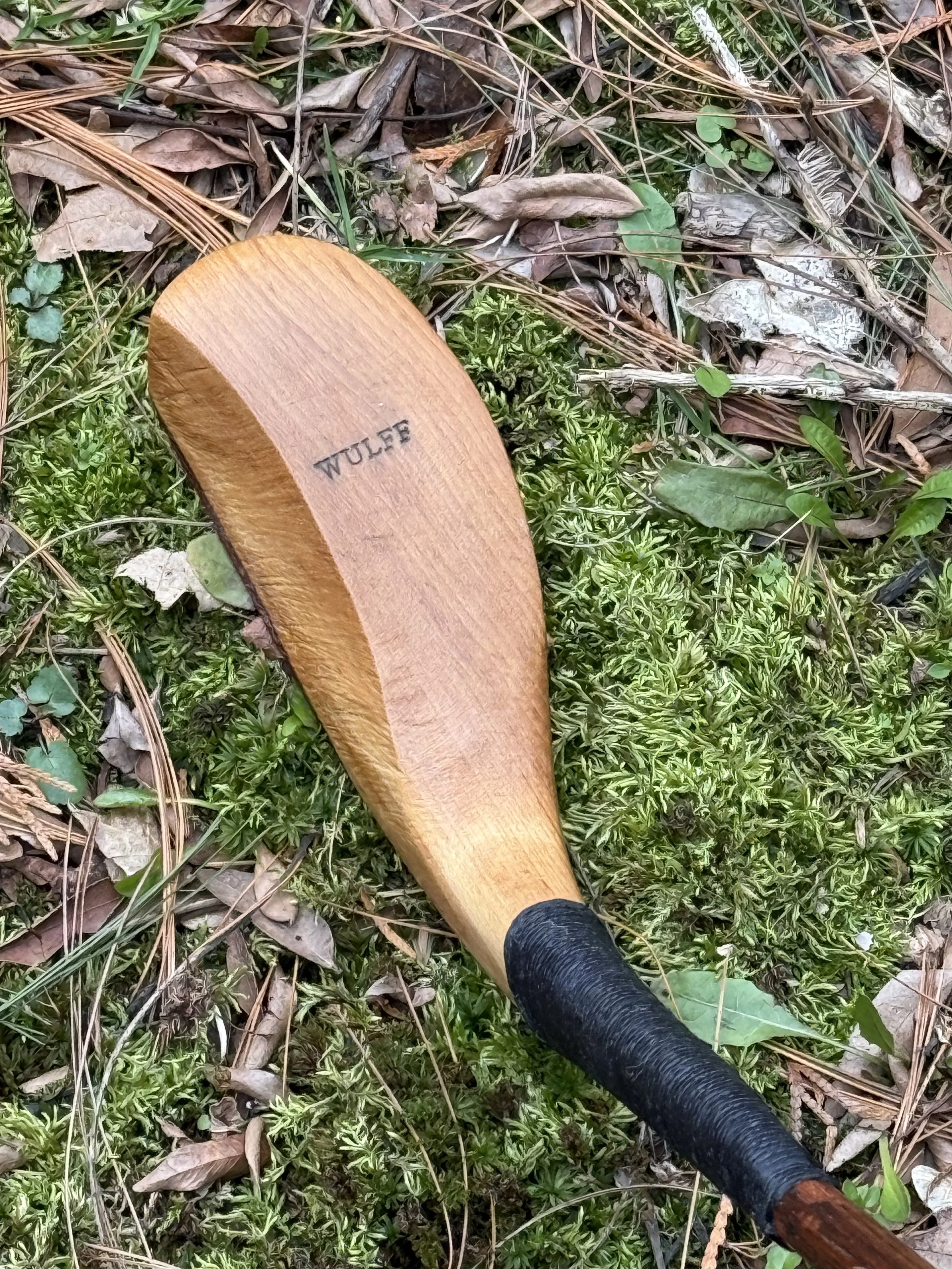
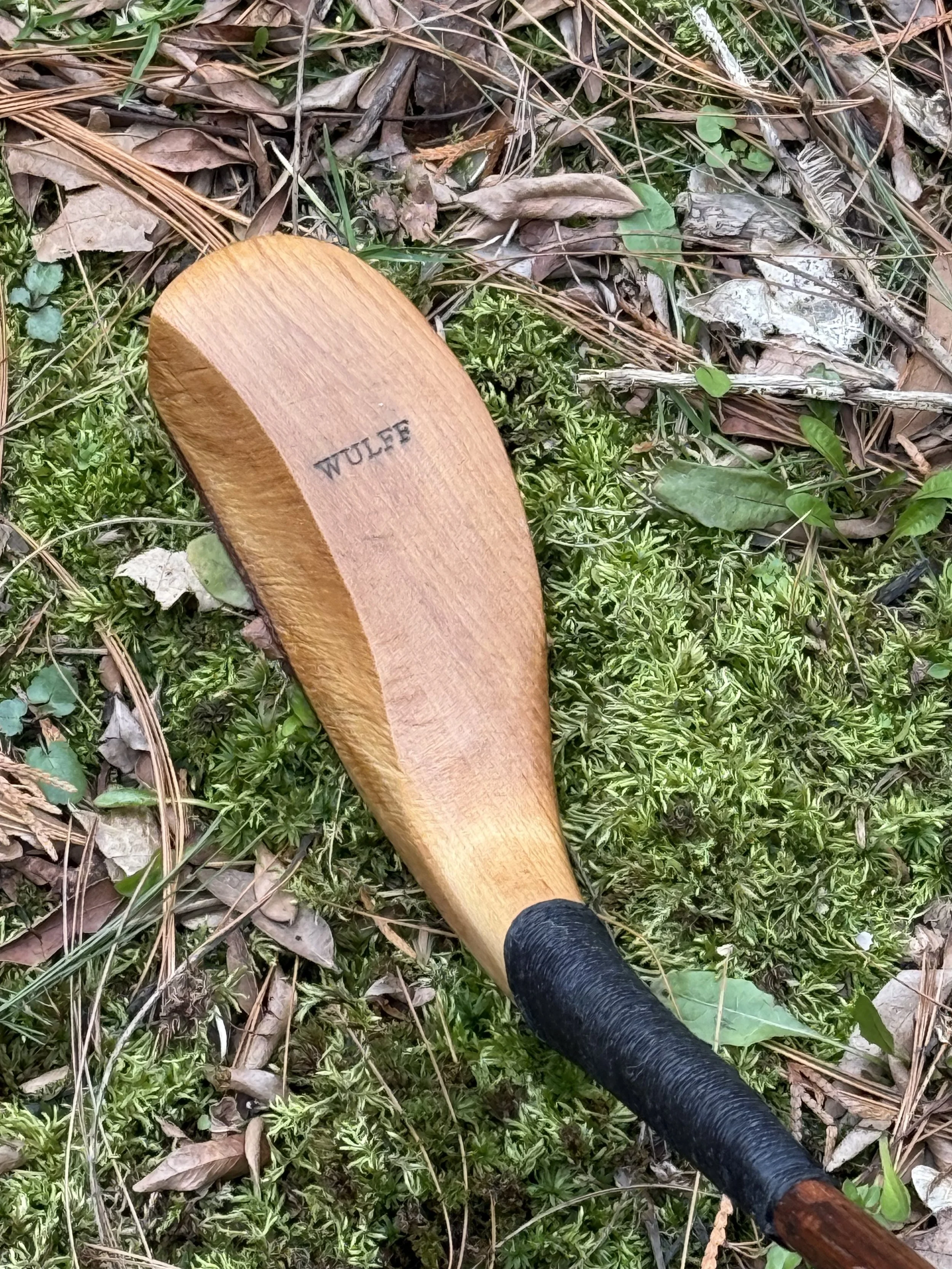
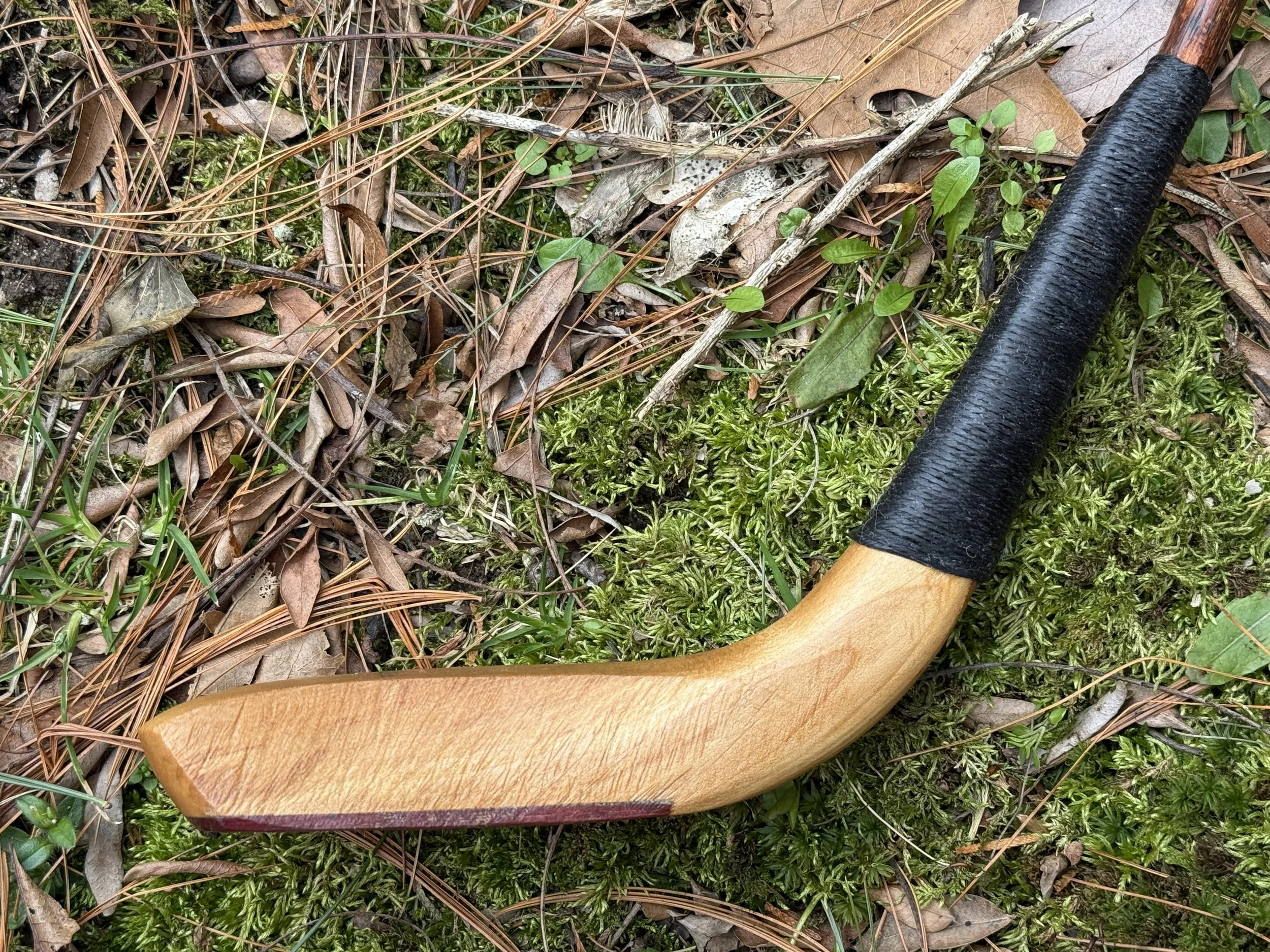
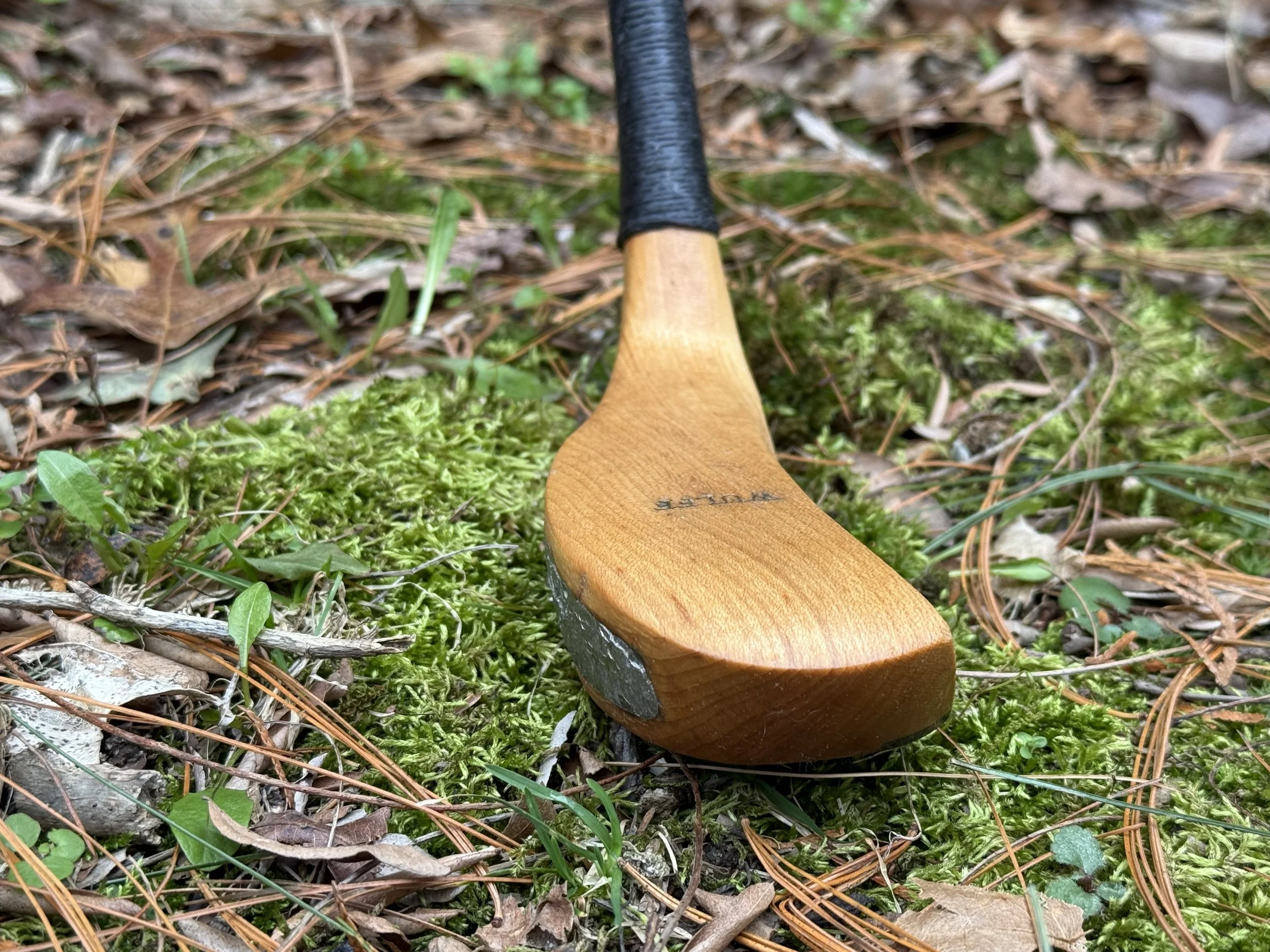
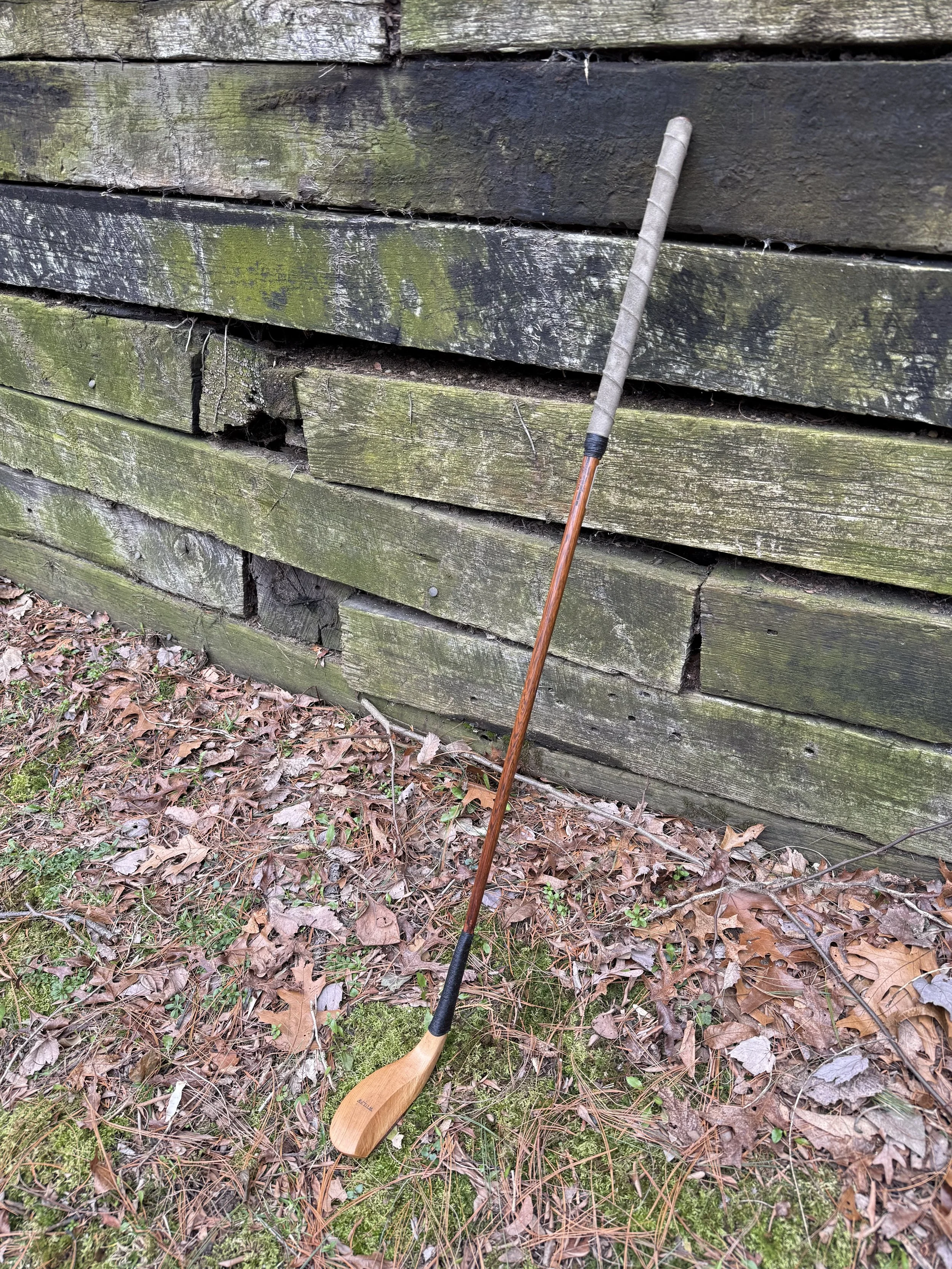
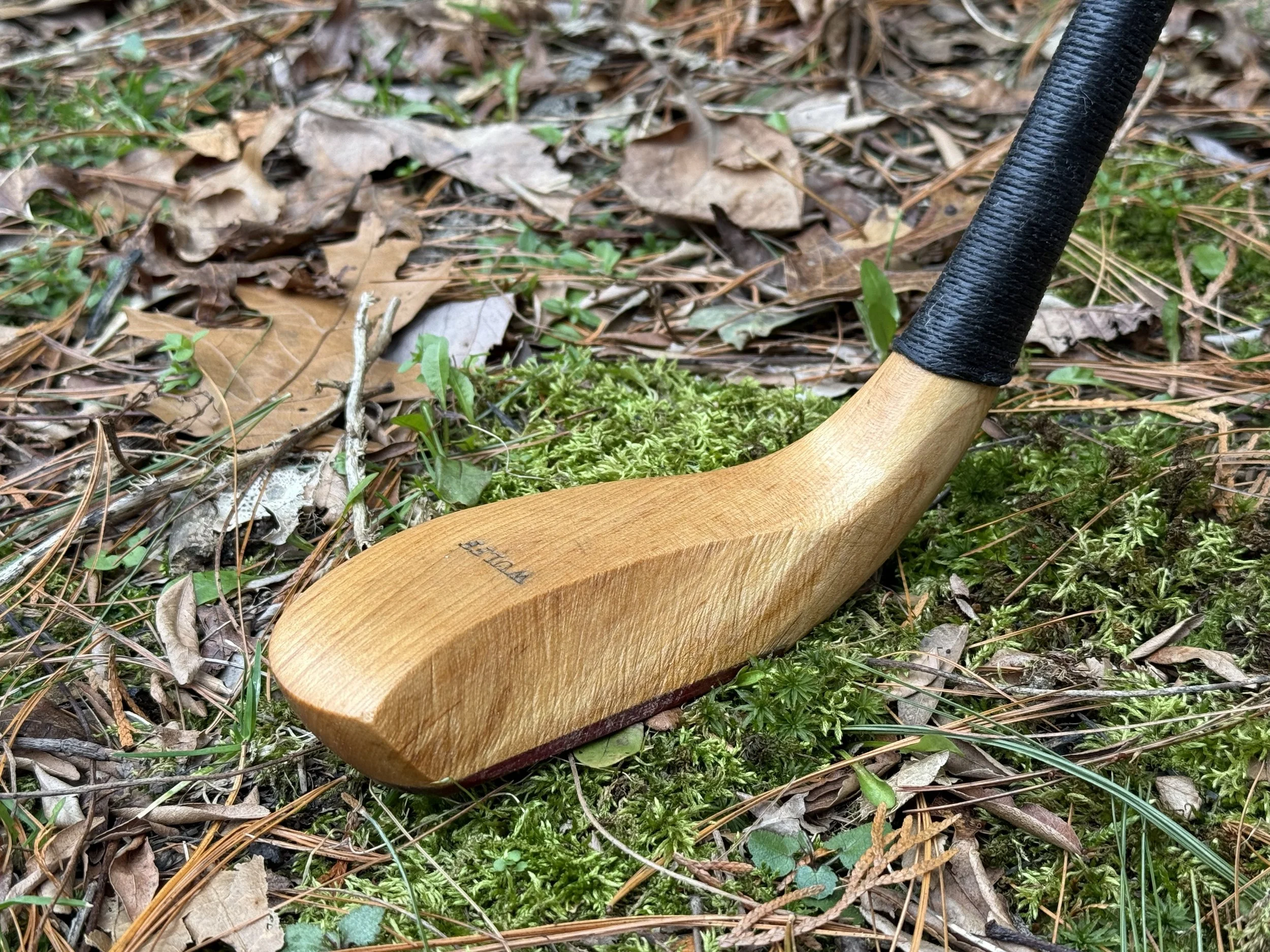
The Wulff 1848 Short Spoon is loosely based on the template of an 1850s Hugh Philp short spoon that’s included in Elmer Nahum’s book Practical Clubmaking. The example shown here is a Standard model made from hard maple and I also make this club in European beech. Premium models of this club are also available in exotic woods for $275.
The short spoon is an interesting club in that it has an upright lie angle close to a putter but with the length and loft of a longer club. The general consensus among modern long-nose clubmakers is that the short spoon was originally designed to be played as a handy approach club for the featherie and gutty equivalent of a bump-and-run. That said, I’ve also found it very useful off the tee and for long approaches, making it the most versatile of the long-nose clubs, in my opinion. For that reason, I include the short spoon with the putter in my popular two-club Wulff 1848 Long-Nose Starter Sets. When available, this club is also sold individually for $225.
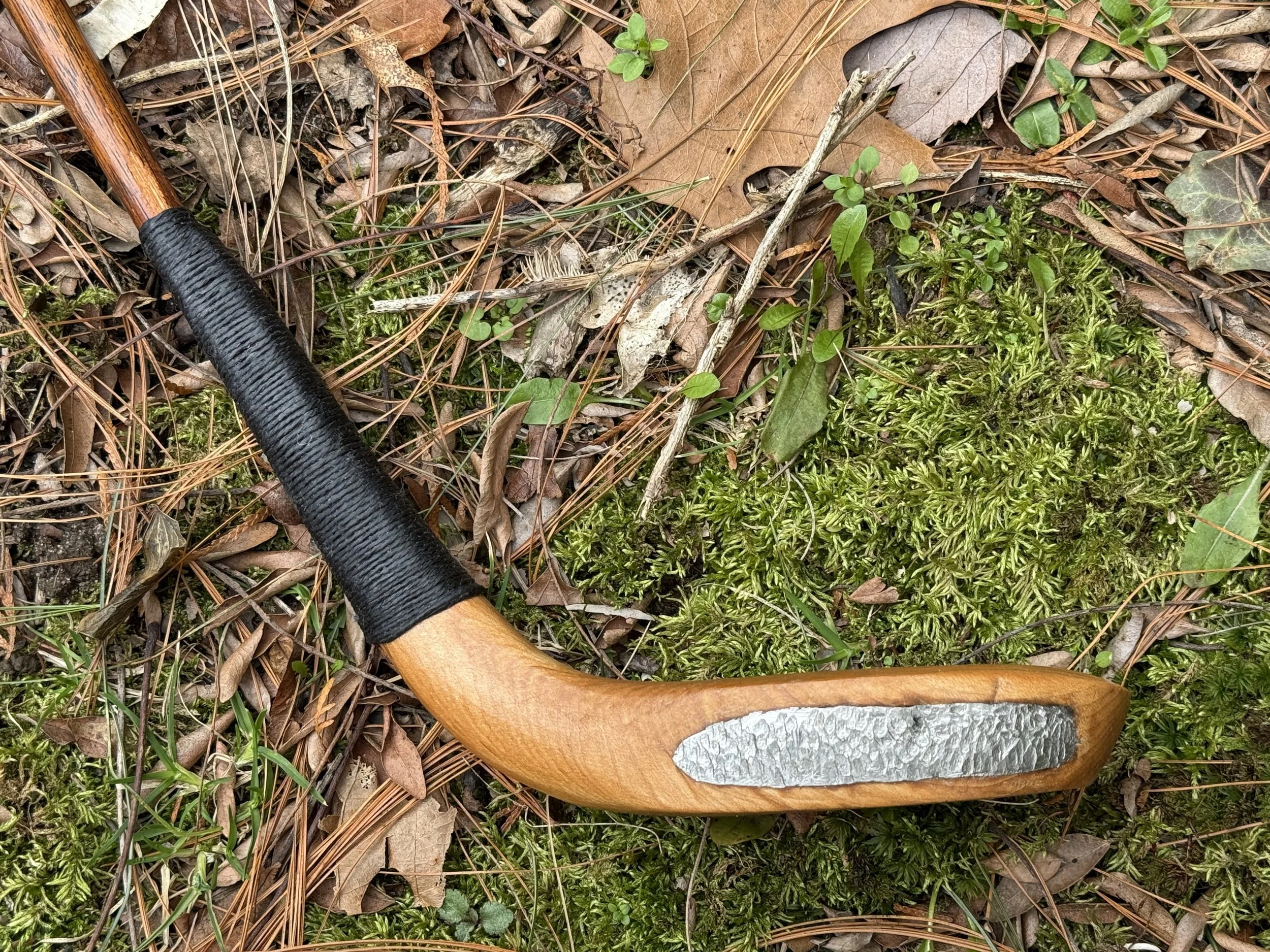
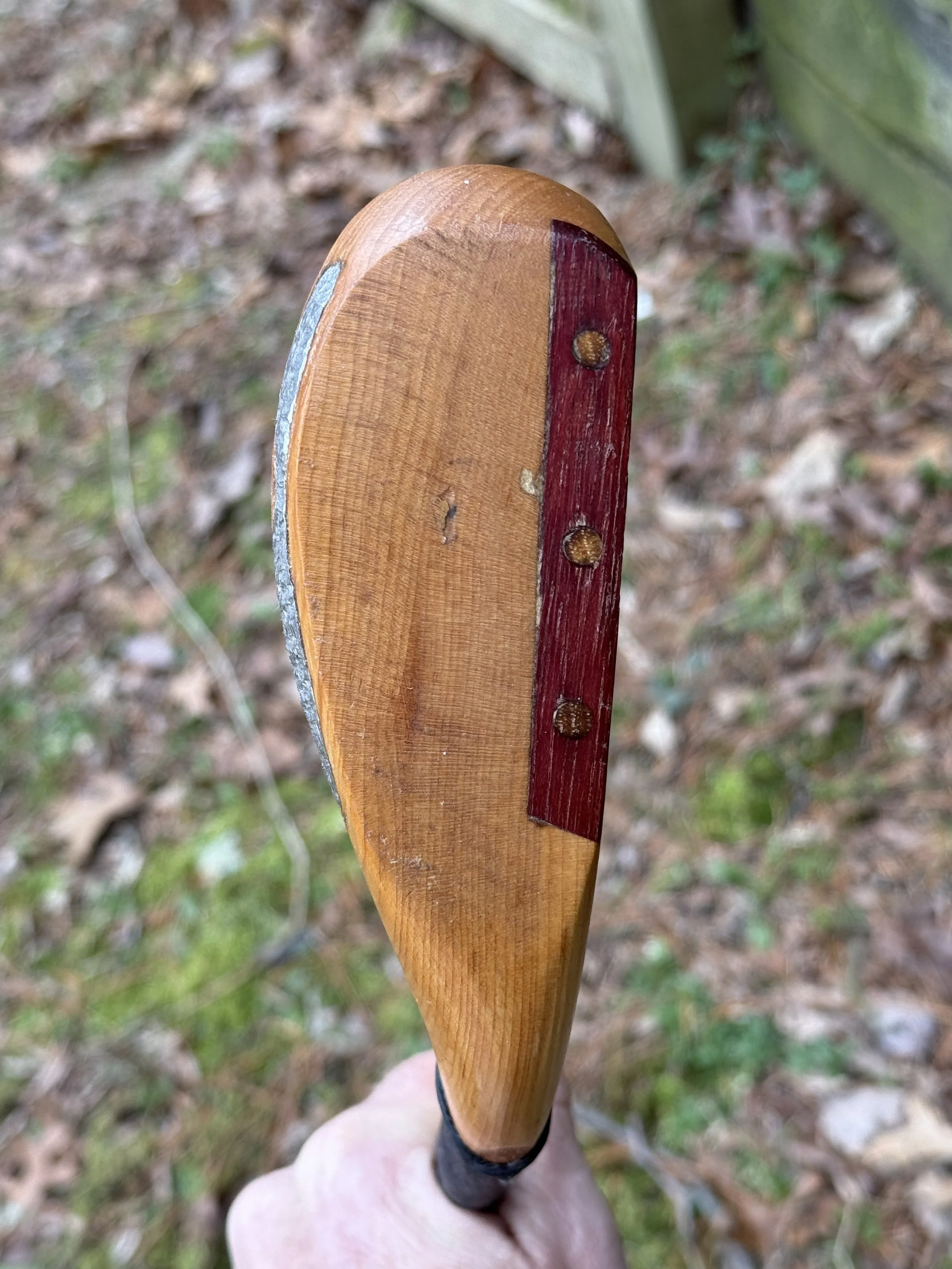
Traditionally, the material on the leading edge of the sole would have been made of ram’s horn, but in the spirit of “embracing a history that never was,” I generally usually use a very dense hardwood called lignum vitae, which would have been available to a hypothetical club maker living and working on Long Island, NY, in the mid-1800s. On the example shown here, I’ve opted to use a purpleheart, which is a hardwood native to Central and South America. I also make premium versions of this club with deer stag as the “horn.” The weight on the back of the head is poured and hammered lead.
The natural finish on this example is simply linseed oil and shellac with no added color. I also make them with an antique finish and a charred finish inspired by the Japanese technique known as shou sugi ban.
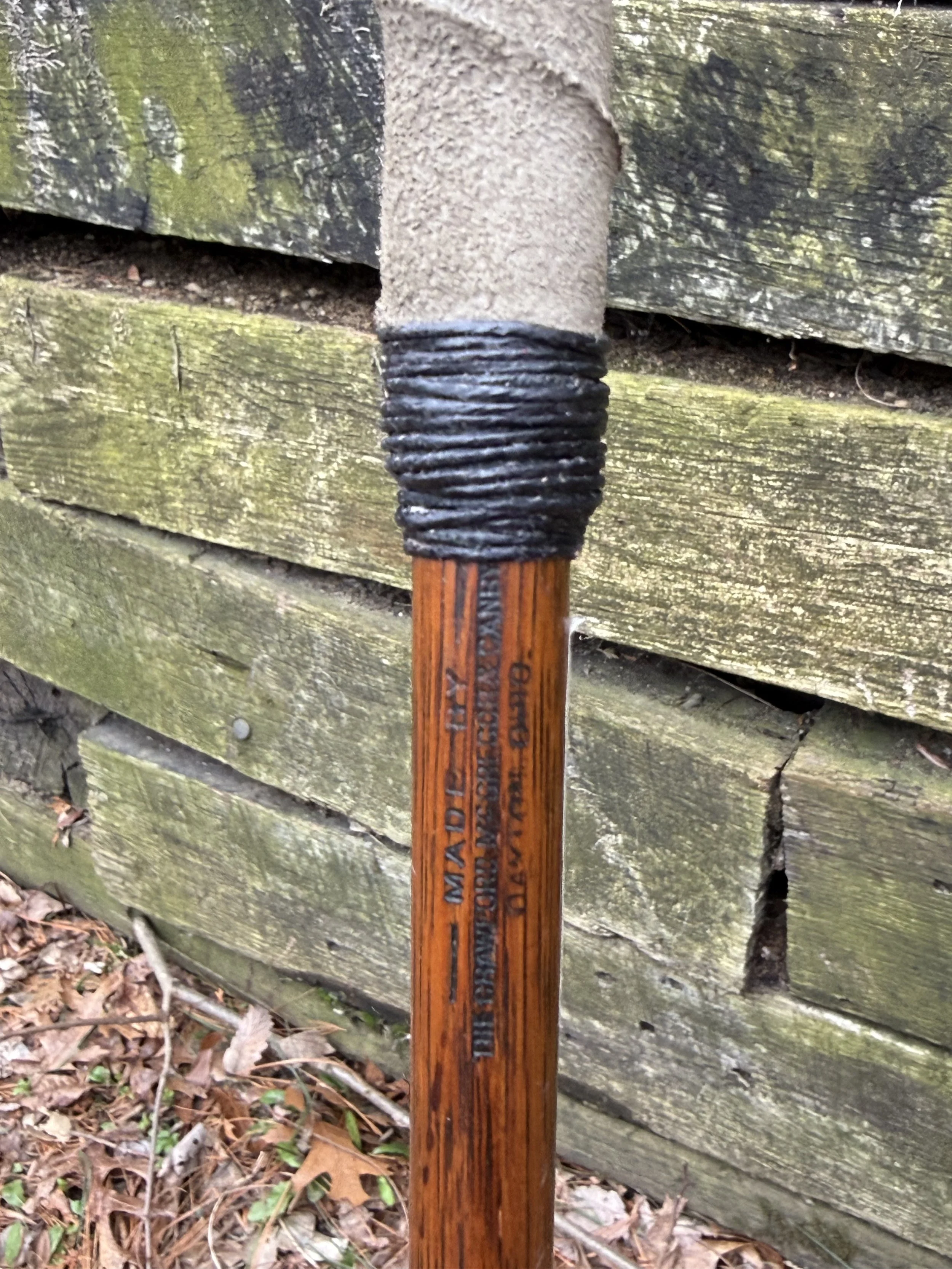
The shaft on the 1848 Short Spoon is generally vintage hickory or modern hickory dowel. On premium versions, I handcraft the shaft from riven hickory using the tools and techniques of 15th-century bow makers, who were the original club makers.
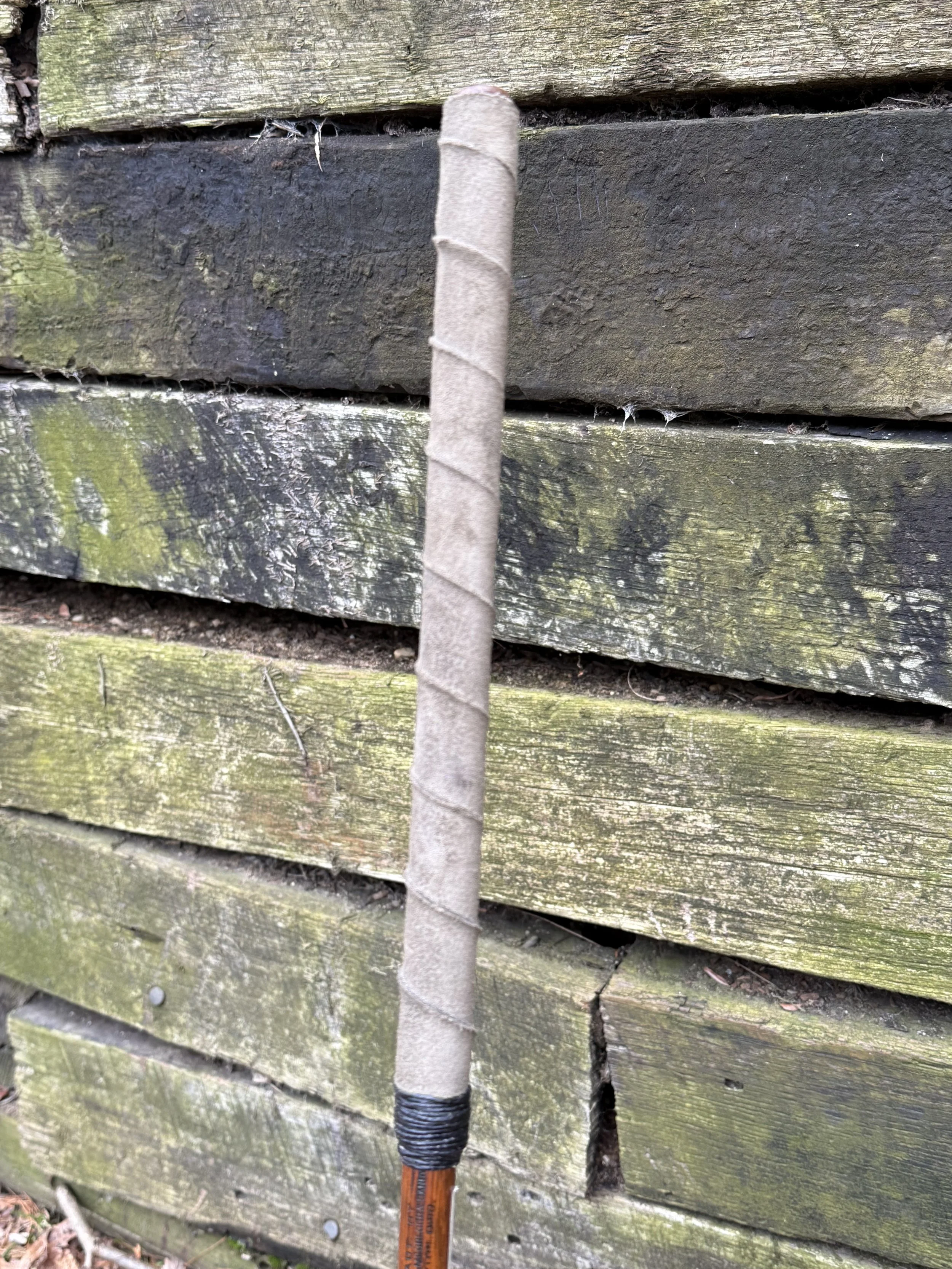
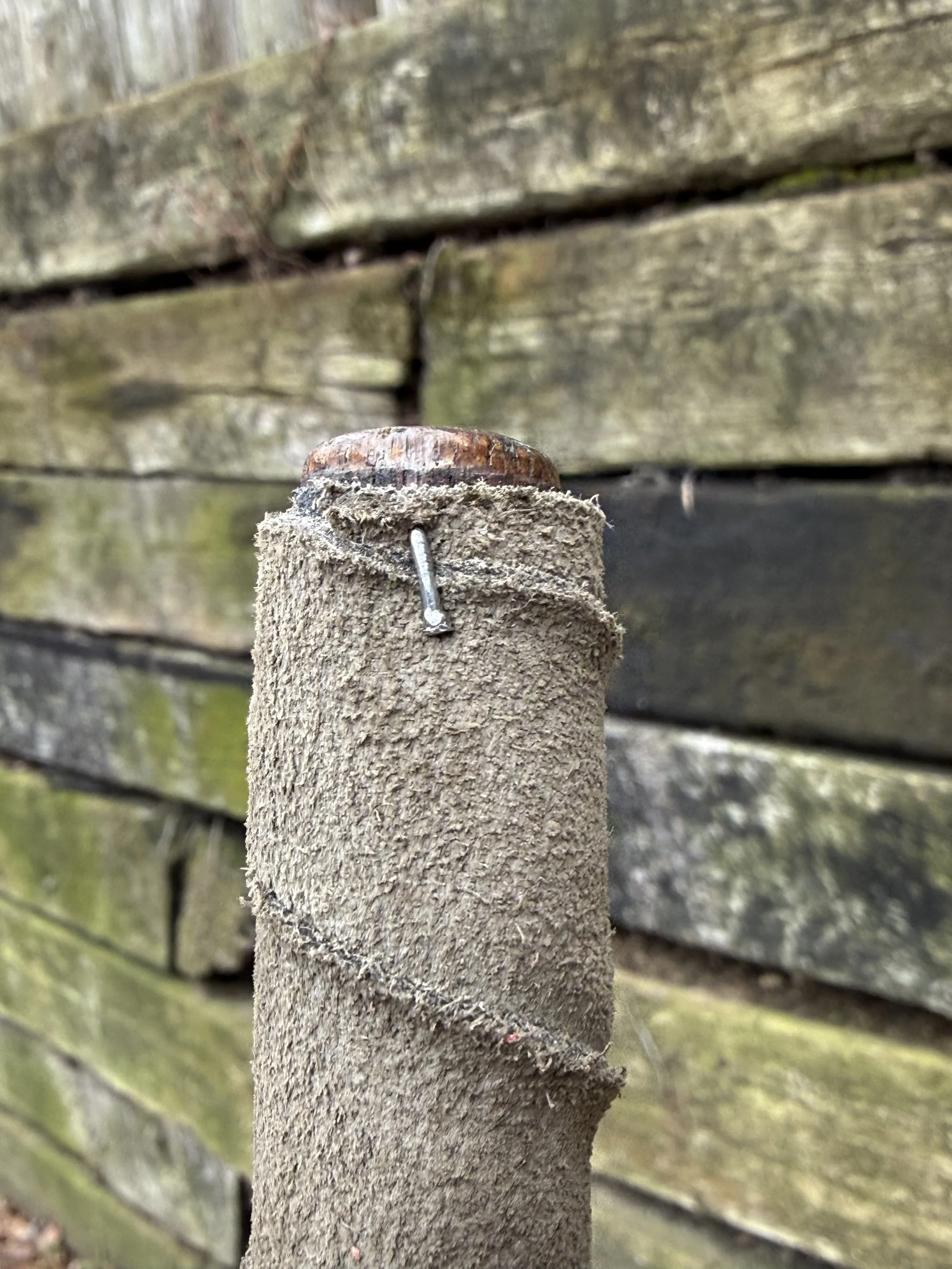
The khaki leather grip is a thick strip of suede-side-out cowhide on top of a strip of felt under listing, and it’s secured to the end of the shaft in the traditional way with a bent nail.
The 1848 Short Spoon can be played with featherie, synthetic gutta percha, and modern low-compression balls.
General spec ranges:
20-24 degrees of loft
mid E to mid F swing weight
39 inches long
When available, price is $225 for the individual club or $400 as a complement to the putter in the two-club Wulff Long-Nose Starter Set. Also available in Premium model for $275.
If you’d like to be notified when a Wulff 1848 Short Spoon is available, please contact me below to be added to the mailing list for this club.