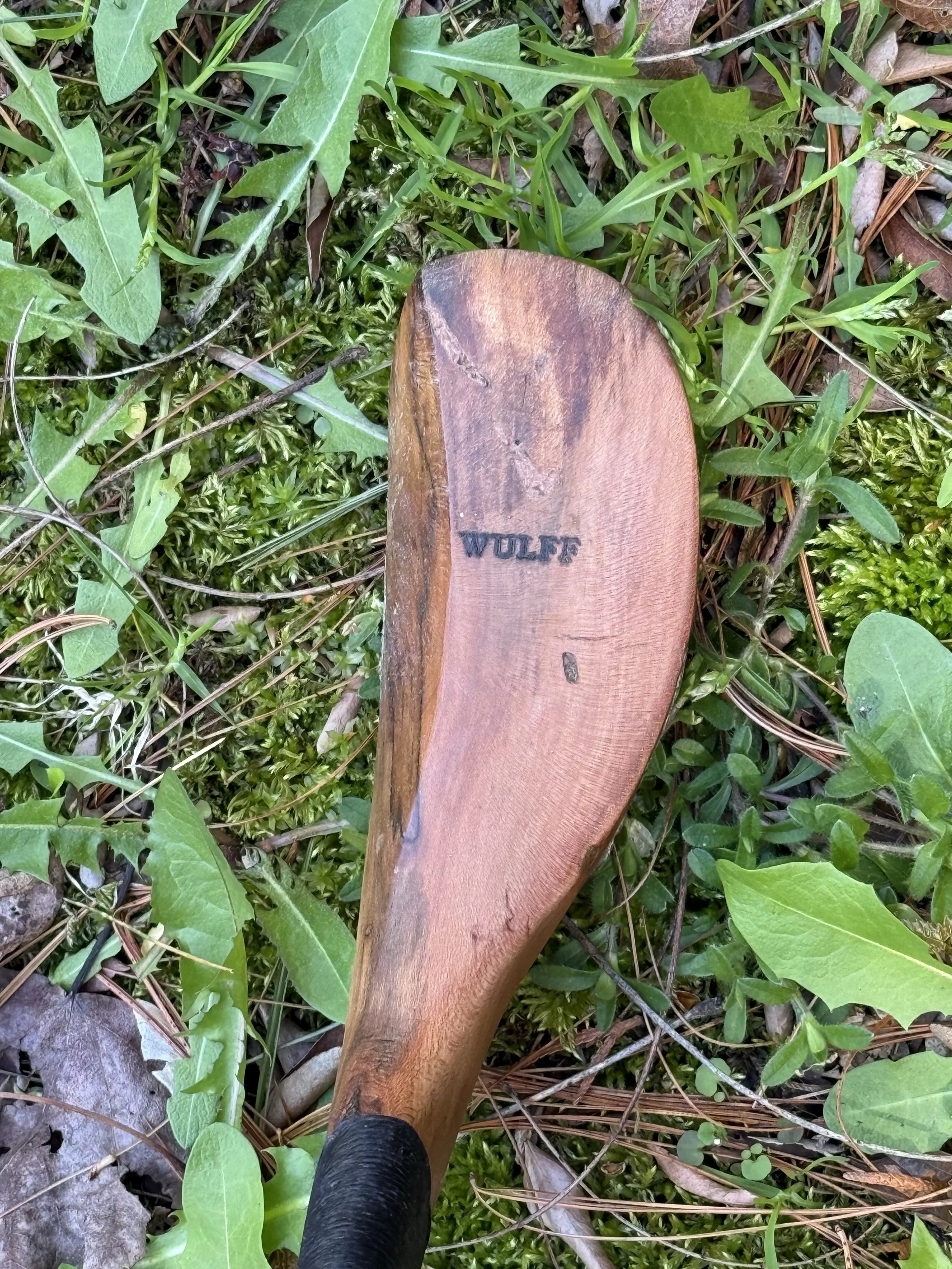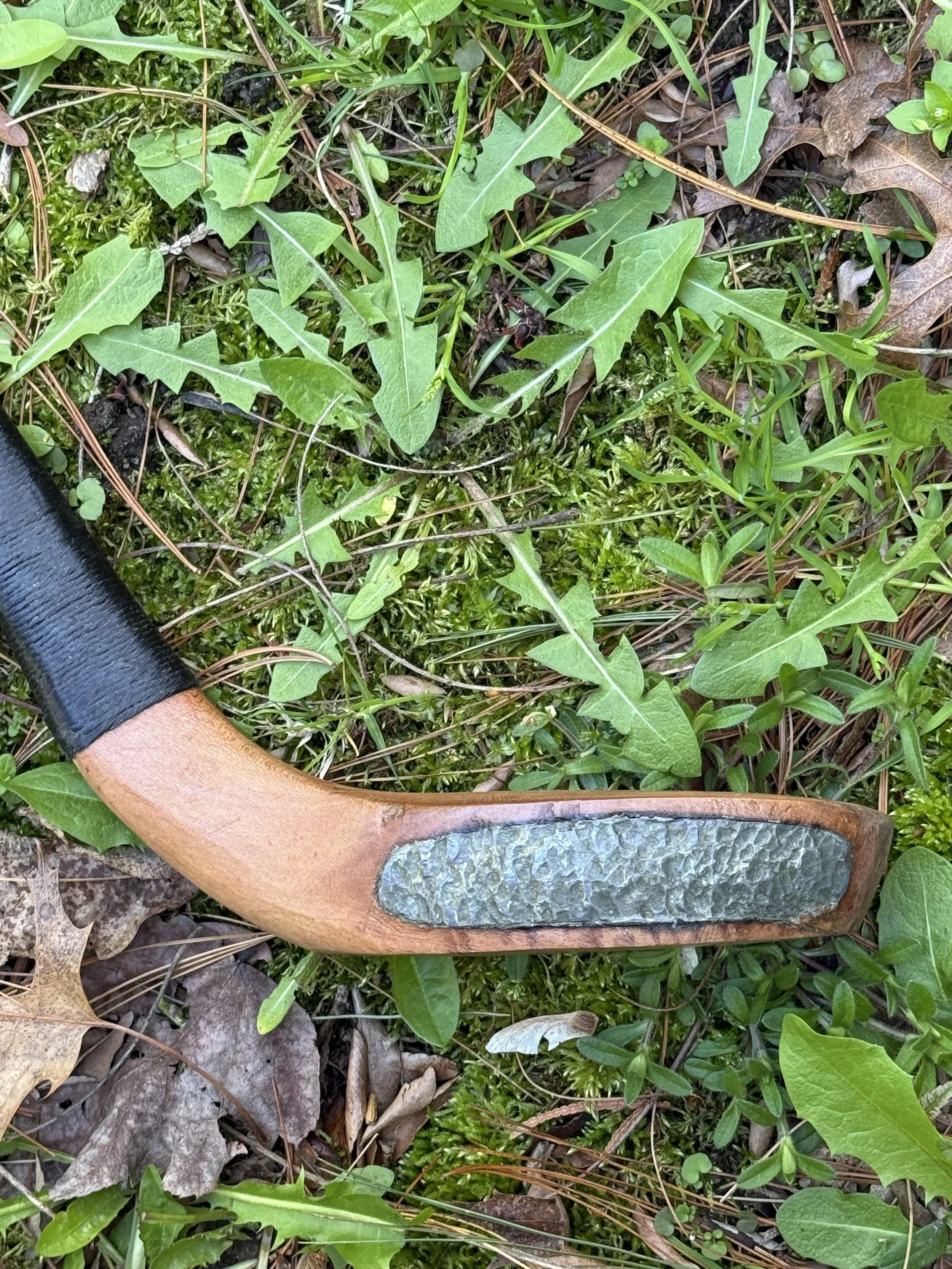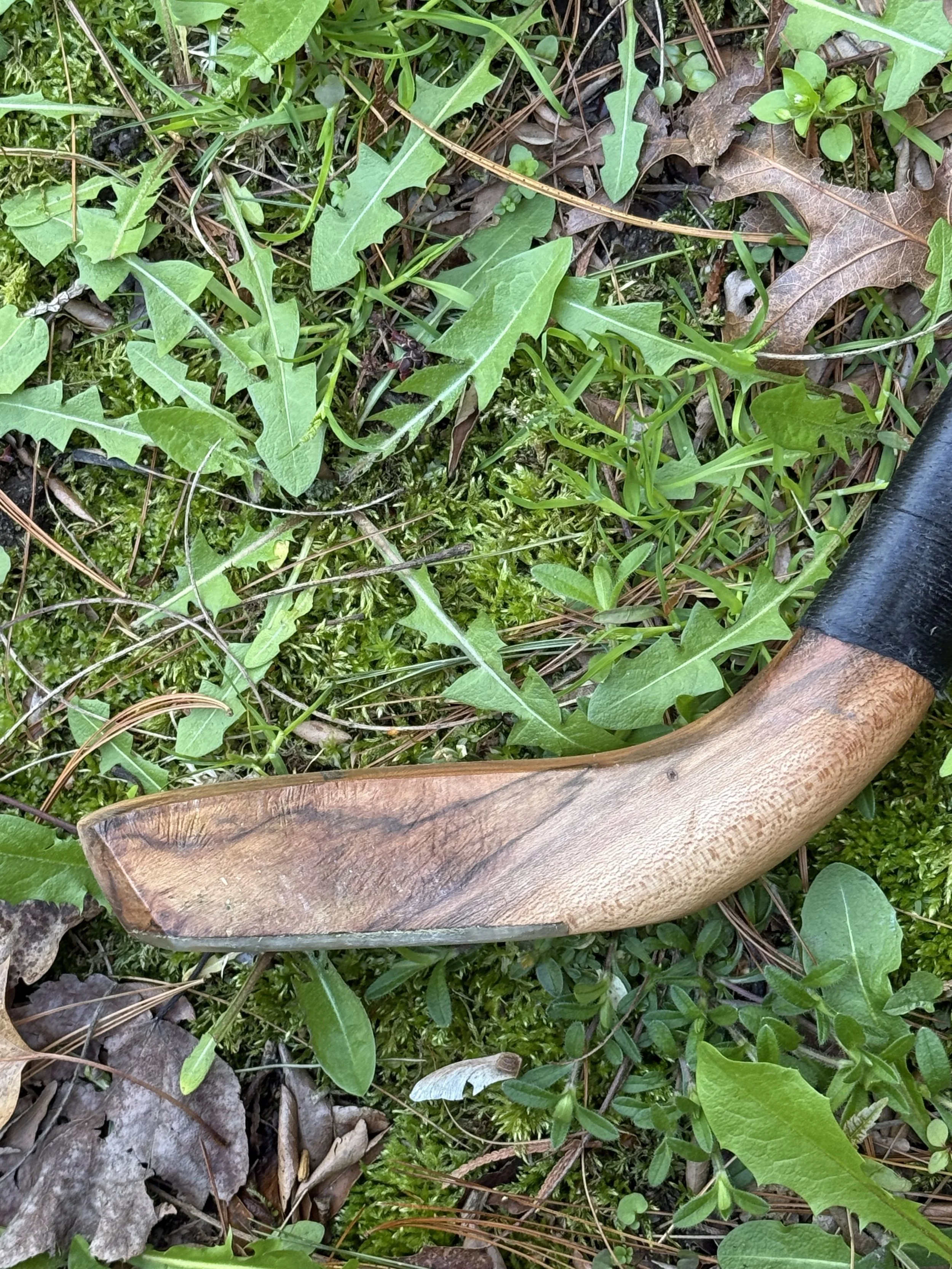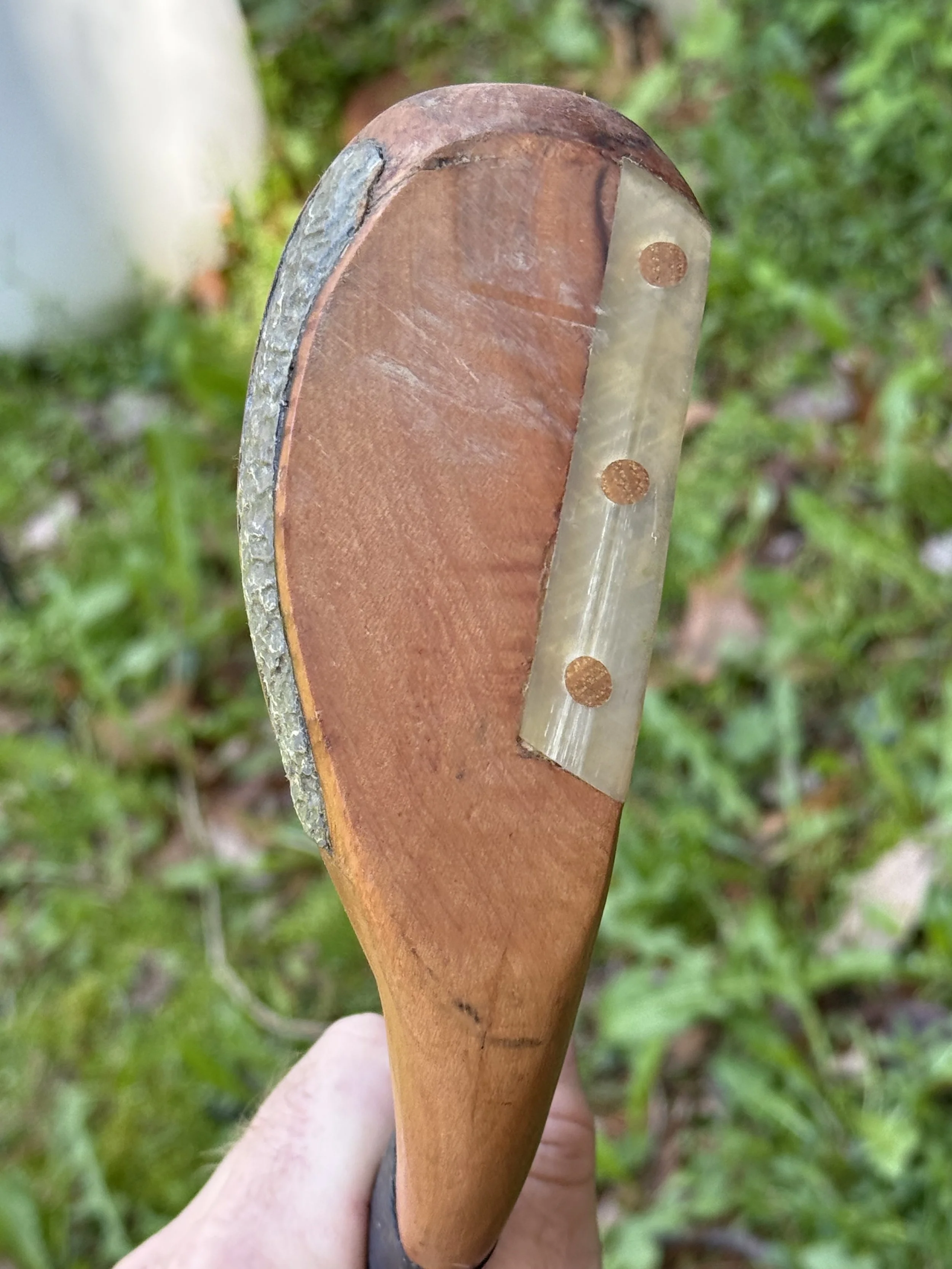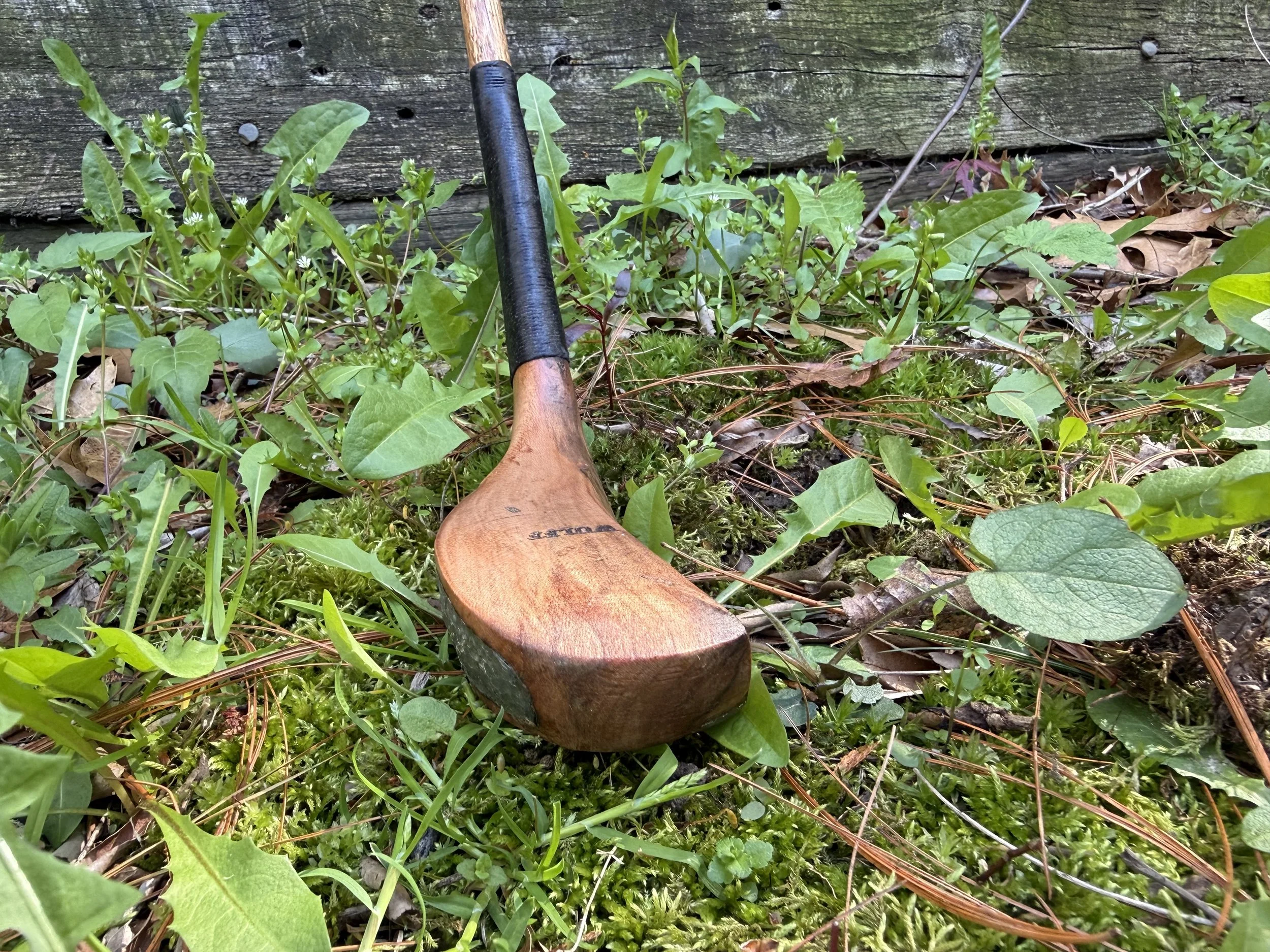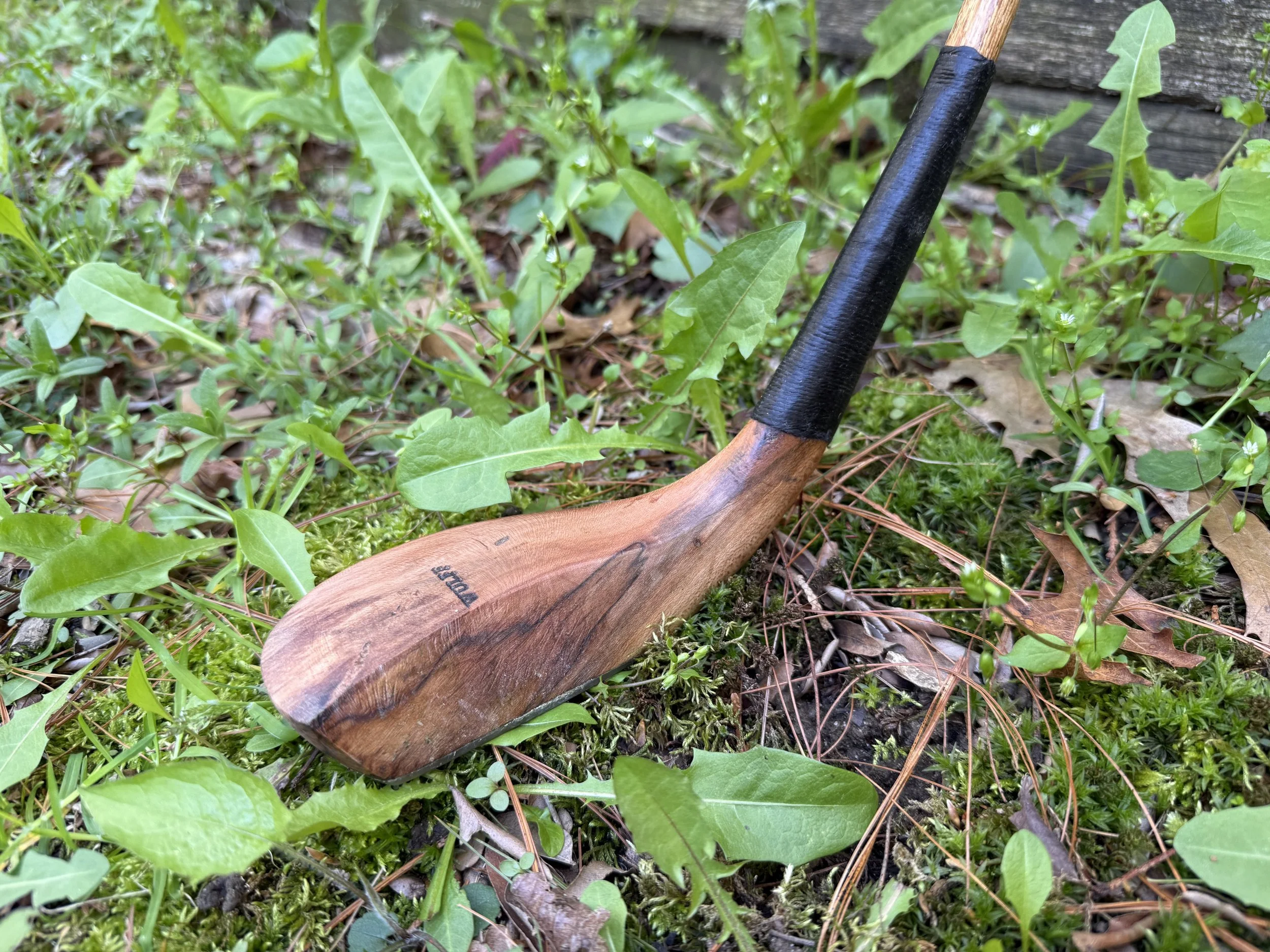
Wulff “1860 Series”
Baffing Spoon
The Wulff long-nose clubs in the 1860 series commemorate the clubs designed during the “gutty” era, which lasted from the late 1840s to the early 1900s. After the introduction of the gutta percha ball in 1848, club makers needed to improve the durability of long-nose clubs to hold up to the harder “guttie.” Eventually, the delicate and graceful designs of the fruit wood long-nose clubs of the featherie era took a backseat to characteristics that prioritized durability such as denser wood, thicker necks, and leather faces. The long-nose clubs in this series pay homage to the workhorses of the gutty era and are made with materials and a design suitable for play with the synthetic gutta percha ball as well as modern low-compression balls.
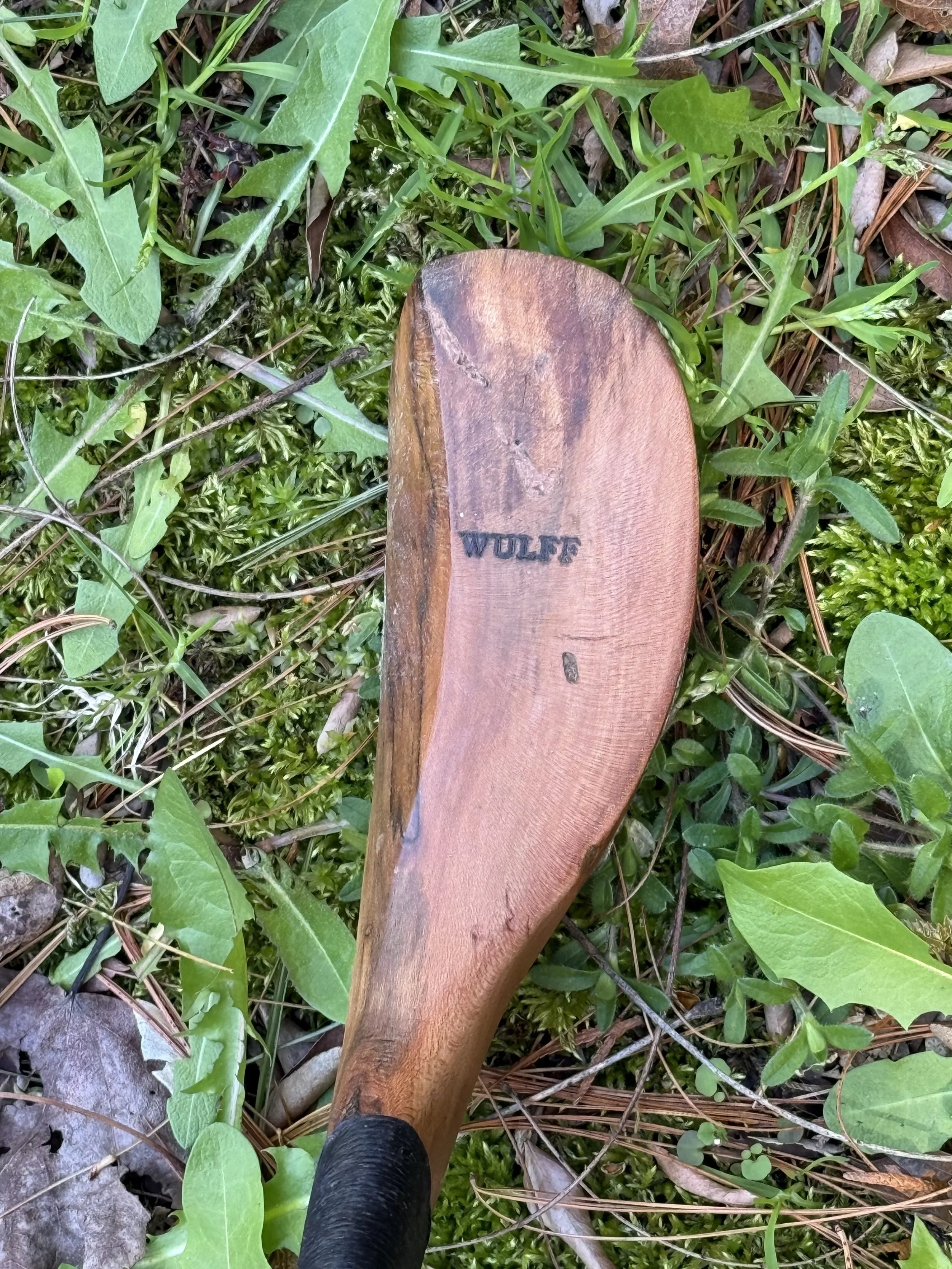
The Wulff 1860 Baffing Spoon is loosely based on an actual 1860s-era baffing spoon made by Robert Forgan. The example pictured here is a Premium model made for gutty golf from dogwood and I also make this club in a Standard model from hard maple (also for gutty) and pecan hickory (for featherie only). The Standard model clubs are sold individually for $225 and the Premium model clubs are $275.
The baffing spoon is one of the most lofted long-nose clubs you’ll find and is generally 30-35 degrees of loft. I find it to be most useful as a short-range lofting club or for rescue situation where the ball is in thicker rough or bunkers. For that reason, I like to make them heavy but around 37 inches long in play length, which makes them effective in rescue situations but also keeps them manageable for full swings.
The material on the leading edge of the sole in this example is ram’s horn, but in the spirit of “embracing a history that never was,” I generally use the very dense hardwood called lignum vitae, which would have been available to a hypothetical club maker living and working on Long Island, NY, in the mid-1800s. Lignum vitae is one of the hardest woods in the world and I find it holds up well to the synthetic gutta percha ball. It’s secured to the sole with traditional hide glue and hickory pegs. The weight on the back of the head is poured and hammered lead.
As you can see from the photos, dogwood has some very interesting character so I opted for a natural finish that is simply several coats of linseed oil and shellac to enhance those natural characteristics and help protect the wood. Depending on timber, I also offer this club with an antique finish of alternating layers of oil stain and asphaltum as well as a charred finish inspired by the Japanese technique known as shou sugi ban.
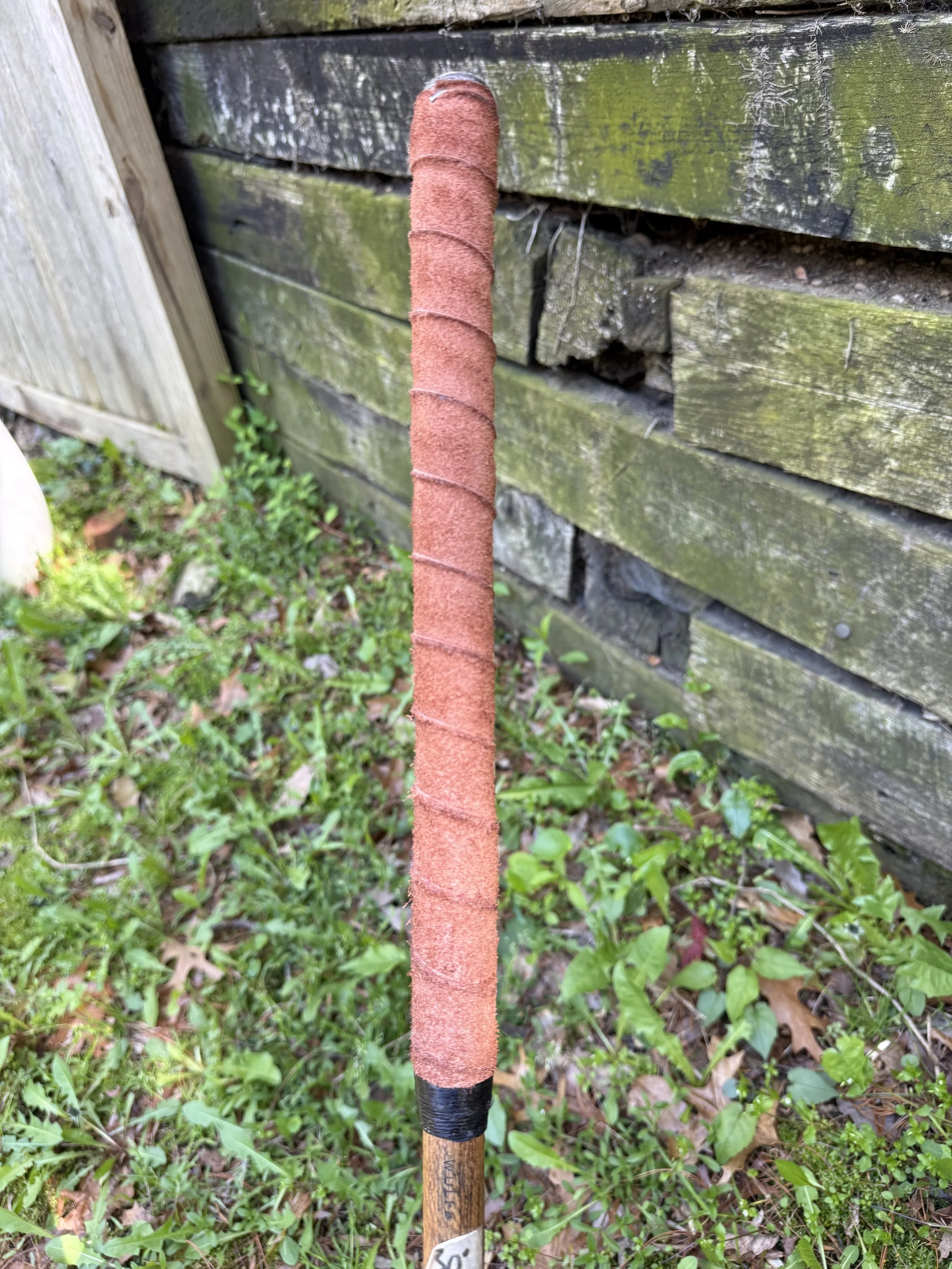
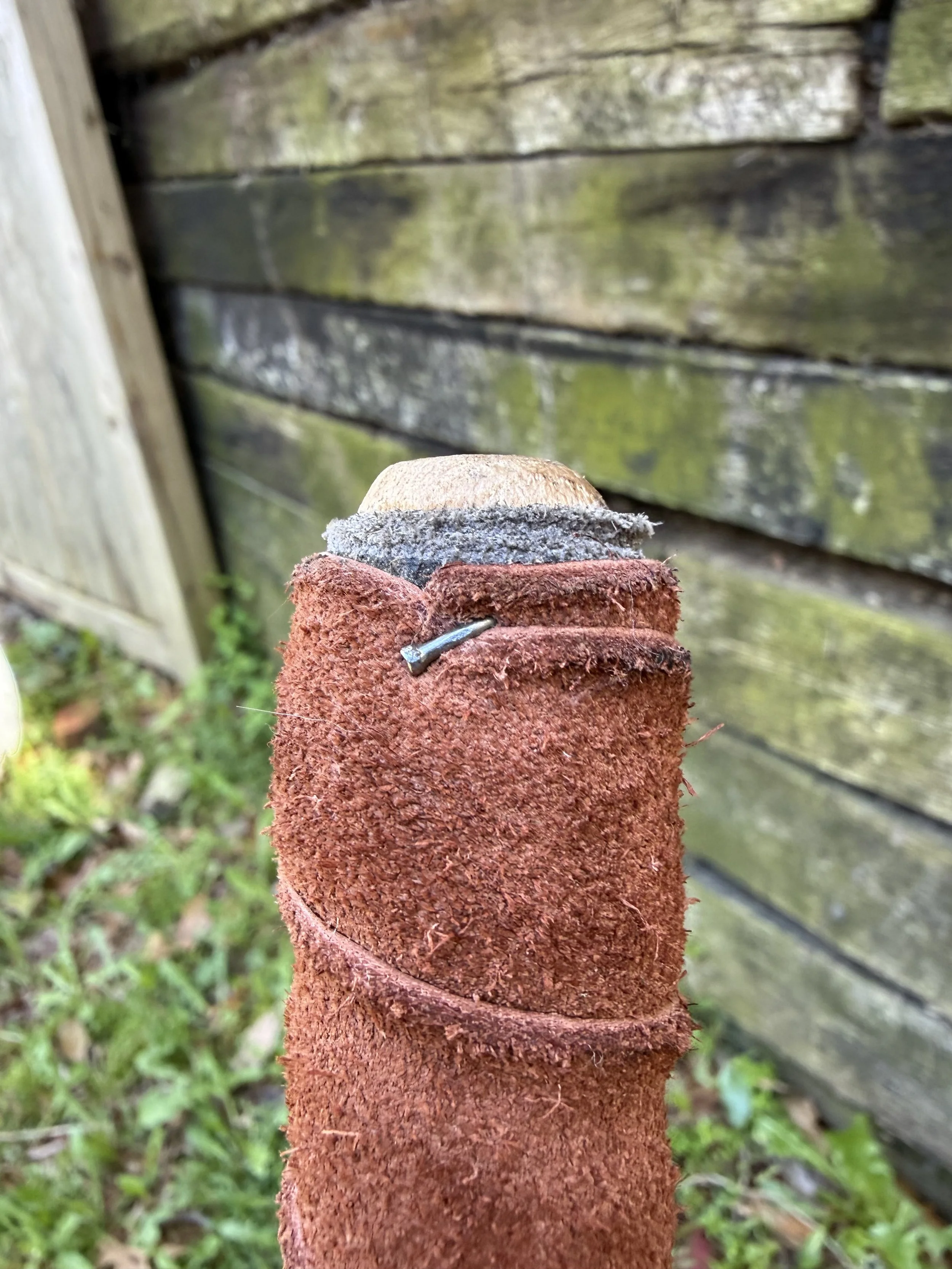
The shaft on the 1860 baffing spoon is generally a vintage hickory shaft, though I also make premium models with a hand-carved hickory shaft with WULFF stamped at the base of the grip. The grip is a thick strip of leather, suede-side-out, on top of a strip of felt under listing that’s secured to the end of the shaft in the traditional way with a bent nail.
The Wulff 1860 baffing spoon in dogwood and hard maple is designed to be played with both synthetic gutta percha and modern low-compression balls, and the pecan hickory version is intended for featherie only.
General spec range:
30-35 degrees loft
low Fs to G+ swing weight
around 37 inches play length
Sold individually for $225 or $275 depending on model
If you’d like to be notified when Wulff 1860 Baffing Spoons are available, please contact me below to be added to the mailing list for this club.